
 Opinion
Let me paint you a picture.
It's 2009. A small bakery owner named Carol wants a website. She calls a web designer, gets quoted $5,000, and nearly chokes on her croissant. She ends up with a Microsoft Word document saved as an HTML file, a pixelated logo her nephew made in MS Paint, and a phone number in Comic Sans. God help us all.
Fast-forward to today. Carol opens Canva, picks a template, swaps in her photos, downloads a logo in fifteen minutes, and has a website up before lunch. It's clean. It's modern. It works on mobile. Her customers love it.
Is it the most sophisticated design work ever created? No. Is it "good enough" to run a successful bakery? Absolutely.
And here's the thing — we need to talk about why that's actually okay. More than okay, honestly. It might be one of the best things to happen to small business in the last decade.
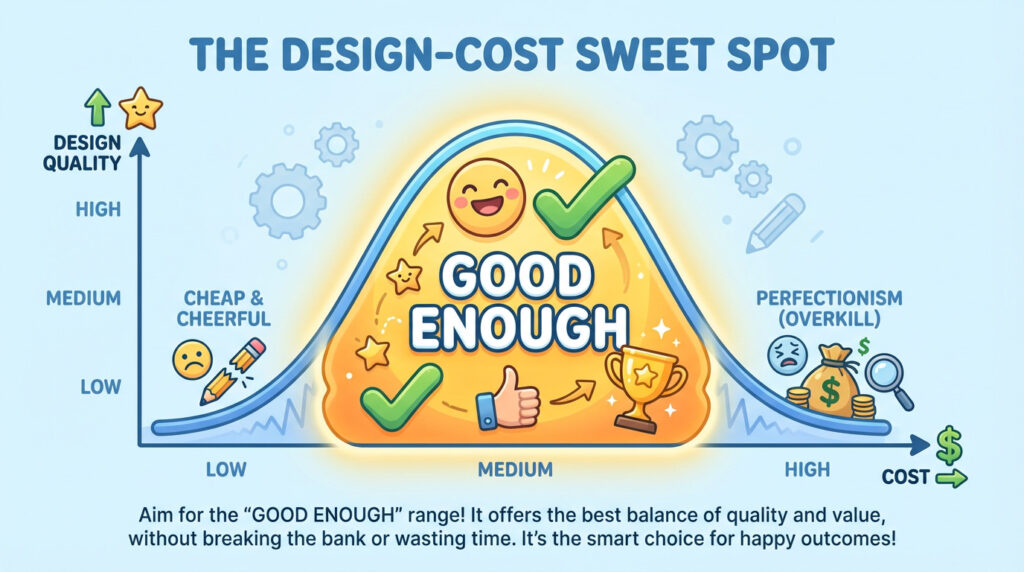
"Good enough" doesn't mean bad. It means appropriate for the job.
There's a narrative in the design world — and trust me, I've been in it long enough to know — that great design is the domain of big budgets, big agencies, and big egos. That unless you've agonized over your kerning for three hours and justified your font choice with a 12-slide deck, you haven't really designed anything.
That's nonsense.
Good design, at its core, is about communication. Does this thing communicate what it needs to communicate, to the right people, clearly and effectively? If yes, congratulations — you've done design. The number of hours or dollars spent is secondary.
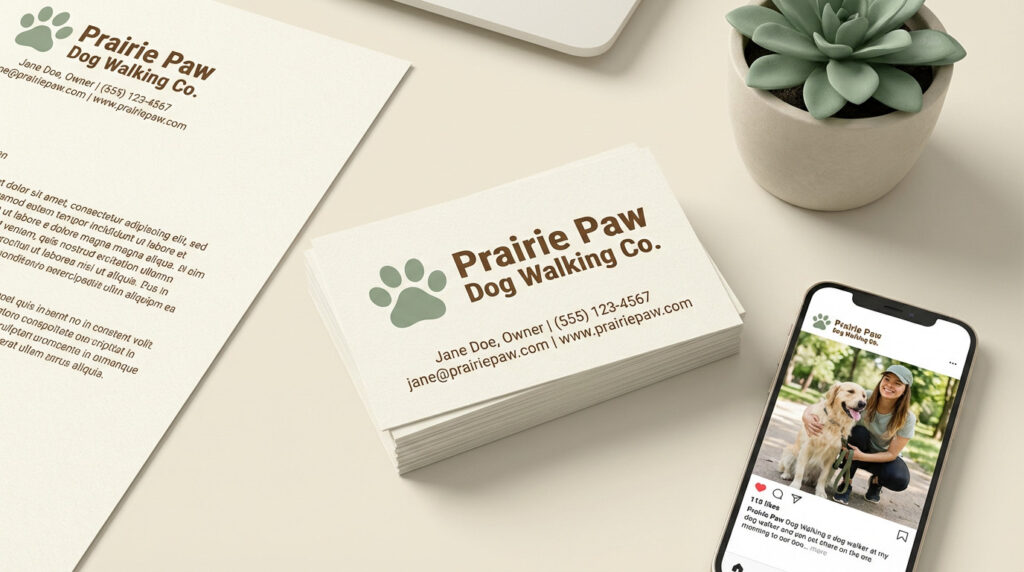
The rise of tools like Canva, Figma's free tier, Adobe Express, and even AI-powered design assistants has democratized the process in a way that used to be unthinkable. A solopreneur running a dog-walking business doesn't need a branding strategist and a mood board. They need a nice logo, a clean colour palette, and consistent fonts. They can get that now — affordably — and it looks good.
That's not a threat to good design. That's design doing its job.
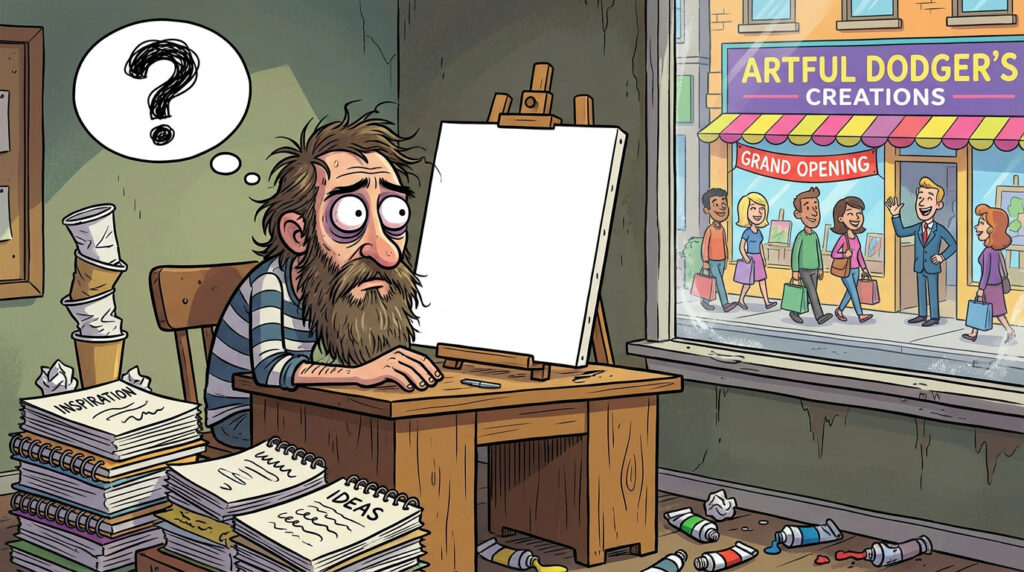
I've watched it happen more times than I can count. A small business owner decides they need everything to be perfect before they launch. Perfect logo. Perfect website. Perfect brand guidelines. Perfect everything.
Six months later, they still haven't launched. Their competitor — who threw up a decent-looking Squarespace site and a Canva logo — has been taking their customers this whole time.
Done and imperfect beats perfect and invisible every single time.
This is where "good enough" design saves the day. Getting to market with something clean and functional is almost always better than waiting for something perfect that may never arrive. You can iterate. You can improve. But you can't sell from a website that doesn't exist yet.
I've seen this with restaurants, fitness coaches, therapists, contractors, consultants — you name it. The ones who move fast and ship something solid almost always outperform the perfectionists. Business momentum matters more than pixel-perfect execution, especially when you're starting out.
Here's the part where I want to be specific, because "good enough" is not a license for ugly. There's a difference between "this is clean, functional, and appropriate for my business" and "this is a hot mess I threw together in 20 minutes while watching Netflix."
Good enough means: your fonts are consistent (pick two, use them everywhere), your colours are intentional (a small palette, not a rainbow), your logo doesn't look like it was made in 1997, and your website loads fast and works on a phone.
Good enough does NOT mean: blurry images, a logo in 47 different colours, text that's impossible to read, or a website last updated when Justin Bieber was still in middle school.
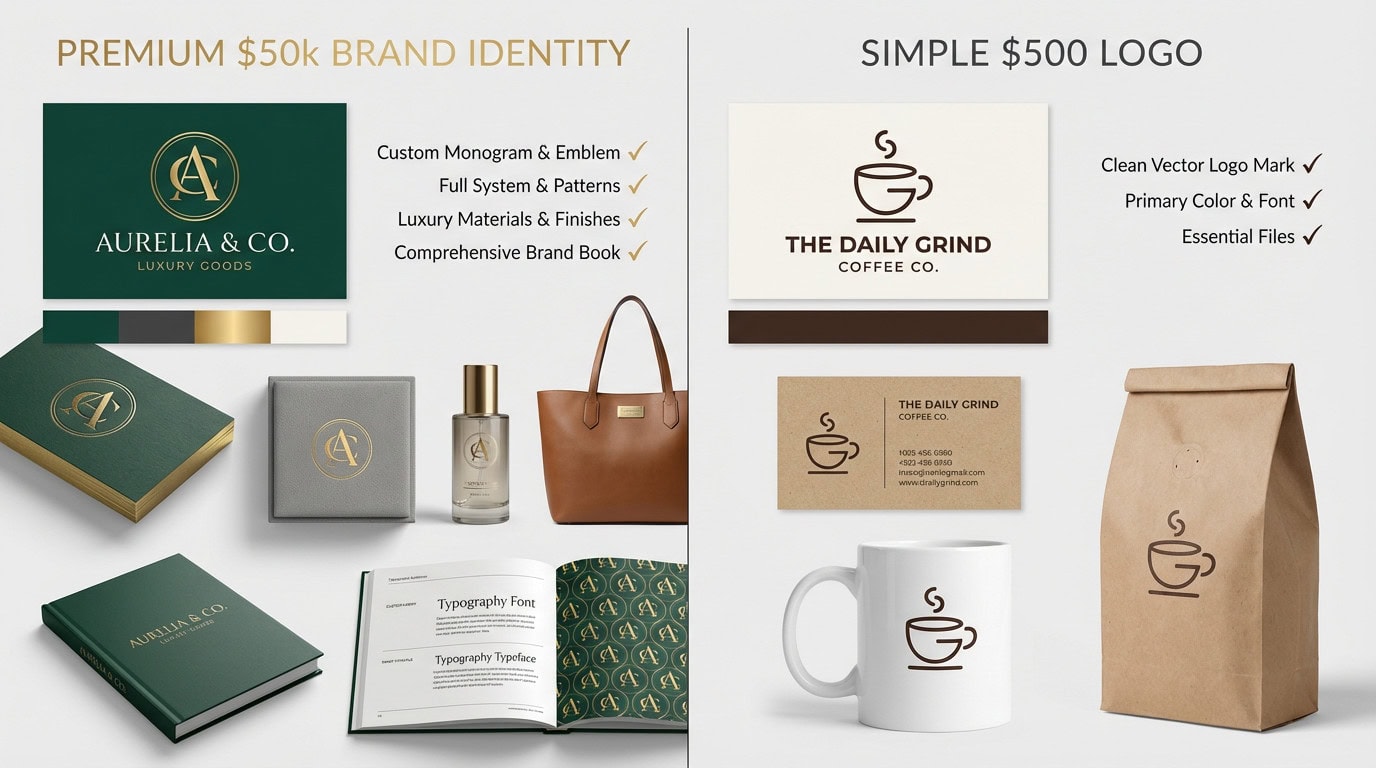
The bar isn't perfection. But the bar is also not nothing. "Good enough" lives in the productive middle — where you've made deliberate choices, things look intentional, and the overall impression is professional without requiring a second mortgage to achieve.
Let's give credit where it's due. A handful of tools have genuinely changed the game for small business design, and they deserve a shout-out.
Canva remains the undisputed king of accessible design. Their template library is enormous, their brand kit feature keeps things consistent, and the learning curve is basically flat. If you can drag and drop, you can Canva.
Figma (especially the free tier) brought professional UI/UX tools to the masses. Even if you're not a designer by trade, being able to mock up a clean interface or marketing piece is genuinely powerful.
Coolors and Adobe Color solved the "I have no idea what colours go together" problem. Plug in one colour you like and watch it build a palette that actually works. It's kind of magic.
Google Fonts eliminated the "I don't want to pay for fonts" excuse. There are genuinely excellent typefaces available for free, and pairing tools make choosing them almost foolproof.
AI image generators (Midjourney, DALL-E, etc.) are the wild west, but for creating custom background images, illustrations, and social media visuals, they've opened doors that used to require a stock photo subscription and a graphic designer on call.
The point is: the ecosystem exists to support "good enough" design at a price point nearly anyone can access. There's no excuse anymore for truly terrible visual identity — and that's a good thing for everyone.
Great question — and one I obviously have a personal stake in, so I'll be upfront about that.
The honest answer is: everywhere that "good enough" reaches its ceiling.
Good enough gets you launched. It gets you visible. It helps you test whether your business idea actually works before you've invested a fortune in branding. And for some businesses, it genuinely stays "good enough" for years — and that's fine.
But there are moments when you outgrow it. When your brand starts to feel inconsistent because different team members are pulling different Canva templates. When your logo looks awkward at the scale of a trade show banner. When you're pitching a major client and your materials don't quite convey the level of professionalism you've earned. When your website is functional but it's not actually converting visitors into customers.
Those are the moments a professional steps in — not to redo everything from scratch necessarily, but to bring cohesion, strategy, and craft to what you've already built. To take "good enough" and elevate it to something that actually works harder for your business.
Think of 'good enough' design as your starter home. Build equity there, then upgrade when you're ready.
There's also the matter of time. Sure, you can build a decent Canva brand kit yourself — but do you want to? Is that the best use of your hours as a business owner? Sometimes the smartest move is paying someone who does this fast and well so you can focus on what you actually do.

Let's zoom out for a second.
Twenty years ago, having a professional-looking brand was largely a function of budget. Big companies looked big. Small companies looked small — and sometimes embarrassingly so. The visual hierarchy of business pretty faithfully reflected the financial one.
That's changing. A sole-proprietor candle maker in Hamilton can now have a brand that looks every bit as polished as a mid-size retailer in downtown Toronto. A freelance translator in Mississauga can have a website that puts some corporate firms to shame. The playing field isn't perfectly level, but it's a hell of a lot flatter than it used to be.
For consumers, that means more choices and better experiences across the board. For small business owners, it means the ability to compete on merit rather than just marketing budget. For designers like me, it means the clients who do come to us are often further along, clearer on what they need, and ready to invest meaningfully.
"Good enough" design hasn't killed the design industry. If anything, it's made the whole ecosystem healthier.
If you're a small business owner reading this, here's your permission slip: you don't need to spend a fortune on design to look credible. Pick your tools, stay consistent, and ship something. Iterate as you go. The perfect brand can wait — your customers can't.
And if you ever hit the point where good enough isn't cutting it anymore? Well, you know where to find me.
(Hint: you're already on my website.)
— — —
About the Author
Alex B is the founder of Jack of All Media, a Toronto-based design and web studio helping small businesses look sharp since 2001. He offers everything from $129 starter websites to full-scale brand builds — because he believes every business deserves to look good, regardless of budget.
— And Why It's Not a Bad Thing